Proper Charging & Maintenance Guide: How to Extend Your Electronic Scale’s Battery Life
In laboratories, industrial manufacturing, livestock management, and jewelry weighing, precision and stability are non-negotiable. However, many operators overlook one of the most vital components of their weighing equipment: proper battery charging and maintenance.
Improper charging habits not only cause battery swelling, capacity loss, and sudden power failure, but can also trigger weight value jump, precision errors, or even damage the internal mainboard.
To help you protect your investment and maintain reliable weighing performance, here are 6 essential rules for charging and preserving your electronic scale’s battery.

1. Always Use the Original Factory Charger
Electronic balances contain delicate precision circuitry and built-in battery protection boards. Always use the original charger supplied by the manufacturer.
- The Risk: Never use fast-charging smartphone adapters or unbranded aftermarket chargers. Mismatched voltage and current protocols can instantly burn out the protection circuit board and accelerate battery cell degradation or swelling.
2. Power Off Before Plug-In — Never Weigh While Charging
Forcing a scale to perform measurements while actively charging creates severe electrical stress.
- Proper Procedure: Always switch off the power button on the scale before plugging in the charging cable.
- The Risk: Weighing while charging increases circuit load, slows down charging speeds, causes display value instability (jumping digits), induces accuracy drift, and rapidly degrades battery health.
3. Ensure an Ideal Charging Environment
Scale batteries are highly sensitive to ambient temperature and moisture levels.
- Recommended Setup: Charge your equipment in a room-temperature, dry, and well-ventilated area.
- Environment to Avoid: Keep away from high temperatures, direct sunlight, damp places, or high-dust conditions. Moisture ingress can cause short circuits, while heat leads to plate sulfation inside lead-acid batteries.
4. Follow the Full 15–20 Hour Cycle & Understand LED Status
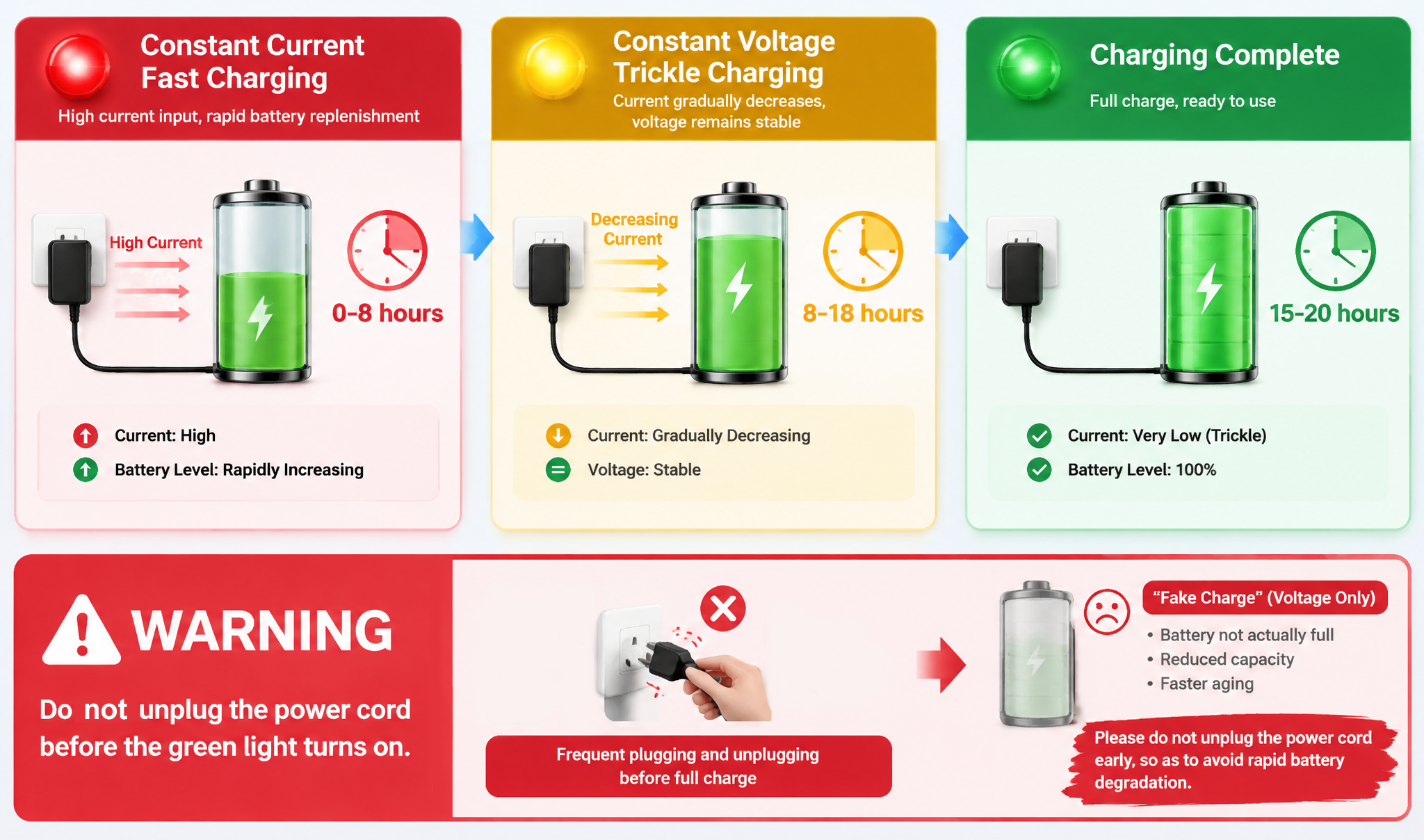
To achieve true full capacity, follow a complete charging cycle (typically 15 to 20 hours) without mid-cycle interruptions. Pay attention to the charging indicator lights:
- Red Light: Constant Current Fast Charging.
- Yellow Light: Constant Voltage Trickle/Top-Up Charging.
- Green Light: True Full Capacity Reached.
- Note: Unplugging the cable before the green light turns on leaves the battery in a "false full" state, accelerating capacity degradation over time.
5. Prevent Overcharging — Unplug Within 1 Hour After Green Light
Leaving a scale plugged in continuously is a major cause of premature battery death.
- Standard Operating Practice: Once the indicator light turns green, unplug the power supply within 1 hour.
- The Risk: Do not leave the scale plugged in overnight or for days on end. Overcharging causes rechargeable lead-acid and lithium batteries to overheat, swell, or leak fluid, reducing total lifespan by more than 50%.
6. Recharge Upon Low-Battery Alert — Avoid Deep Discharge
- When to Recharge: Plug in the scale when the low-voltage or low-battery warning appears on the display. Avoid frequent "shallow charging and discharging".
- Caution: Never allow the scale to run completely flat until it automatically shuts off. Complete battery depletion causes irreversible damage to the electrode plates.
Summary
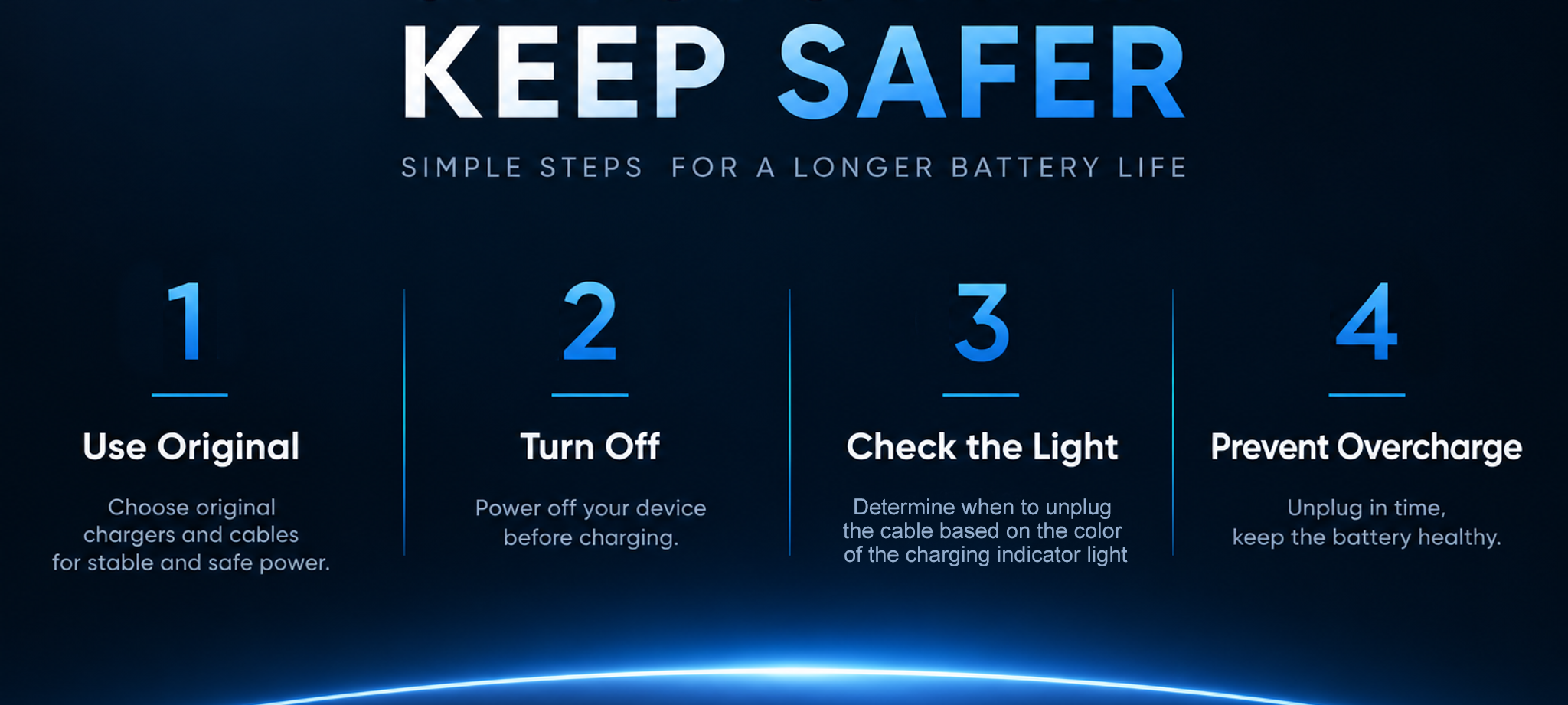
Adhering to correct charging protocols is the easiest way to ensure your electronic scales deliver accurate readings and trouble-free operation over the long term. By remembering four core habits—Original Charger, Power Off First, Watch the Lights, Avoid Overcharging—you can significantly minimize equipment downtime and maintenance costs.
Need technical support, custom OEM indicators, or precision weighing solutions? Contact our technical team today for assistance!